Developing a critical AI literacy to better understand AI use during Engineering processes
Welcome to this opportunity to critically think your AI use
We have several goals we wish for you to realize during your experience utilizing this learning artifact.
- We’ve created a set of learning resources so you may understand generative AI systems with a sociotechnical perspective. Furthermore, we want you to understand the material consequences of using, deploying, and integrating these systems.
- We want to give you, presumably, a fleeting engineer, the initial tools to understand the ways these systems work and how we might critically consider the ways to use these systems in the work you do. This should hopefully encourage many students to learn to tinker as a part of critically understanding and pushing these systems.
- We’ve created pathways that allow you to envision and reimagine a world with these systems in it, whether that be proactive use or understanding how to defend against their use in irresponsible ways, with allowances for you to consider what these systems and their engineering practice mean for your communities and contexts.
Ok, let’s get to setting up our model and running things! Navigate to Foundation to begin!
Here, we will focus on gaining a critical understanding of an AI System generative AI System large language model-based tool. Why the strike-outs in the previous sentence? Well, when we talk about AI systems, that could mean a lot of different types of systems that are good for different purposes, so we will try to be specific and have you be critical enough when hearing of/engaging with AI systems that you remember to ask ciritcal questions:
- “What does ‘AI’ mean in this context?”
- “Do I actually need to use AI here? If I think so, why?”
- “What are the limits of the use of a particular AI system in this context?”
- “What knowledge or information does the AI system use, or what data was used to train the AI system?”
- “What are the potential material consequences of my AI use here?”
Instead of blindly using an AI system because it “looks cool” or gives a “cool response”, we want you to think more critically about it. We know you can stay cognizant and stay ready to be critical and inquisitive, because you’re engineers!
In the end, we hope to equip engineers with the tools to be critical of these systems (which may include using them!) such that they have the foundations to become both the mechanic and the luddite.
If you’ve ever heard the phrase “debbie downer”…

…well honestly that might be what you have to be sometimes. But thats the responsibility that can come with expertise!
A little background
There are many ways to define “AI” (which we should clarify, in a pedantic passing, stands for artificial intelligence). Association for the Advancement of Artificial Intelligence (AAAI), for example, has defined AI as “the scientific understanding of the mechanisms underlying thought and intelligent behavior and their embodiment in machines” in the past. Popular books like Artificial Intelligence: A Modern Approach has defined AI as “the study of agents that receive percepts from the environment and perform actions”. These are useful, but they are less critical, perhaps, context-free definitions. The Penn State AI Literacy framework also provides a definition: “the simulation of human intelligence in machines or computer systems that are programmed to perform tasks usually thought to require human reasoning, learning, or decision-making”.
Emily Bender gives a useful critically-oriented set of potential definitions depending on one’s focus/context in an entry for the Oxford Research Encyclopedia of Science, Technology, and Society (click here to see the full entry). She gives a useful background throughout and relies on the semantic use of is a to frame potential conceptual definitions:
- AI is a research field
- AI is an approach to Cognitive Science
- AI is an ideology
- AI is a way to hide and devalue human labor
Unfortunately, many modern AI systems are very opaque and the companies controlling those systems may make answering the original questions posed very difficult. When we can’t answer basic questions like those, it gives an opportunity for the Critical Engineer you should want to become to assess whether you want to use a particular system and whether it is the responsible thing to do.
Values and context are important for thinking about responsibility but folks like Dr. Chris Dancy and Timnit Gebru (who’s pictured below) have written quite a bit on perspectives of responsibility in using AI (and now generative AI) systems. Give “How to use generative AI more responsibly a quick read for one perspective on using generative systems responsibly (though this is slightly contextualized for psychologists and cognitive scientists, the majority of these lessons apply to engineers as well!)

This is all to say that as engineers, you will have a choice in what AI systems you use at tools and how you choose to use them! As folks who engineer artifacts you will likely want to be able to tinker and understand the systems you are using. Some AI systems make that easier than others.
Large Language Models
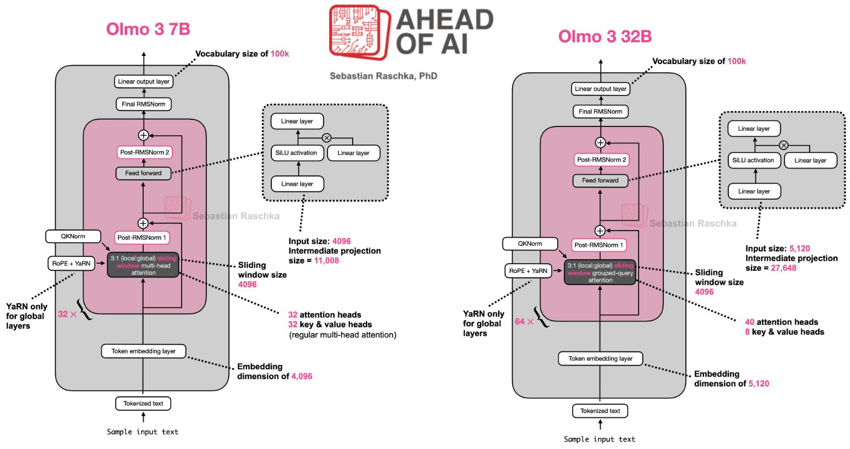)
We are going to explore the use of one particular kind of generative AI system called a large language model (LLM). Large language models are machine learning models that typically use a series of neural networks (with a particular transformer architecture). Here large represents the number of parameters, which these days will be in the billions for the more popular LLMs. LLMs essentially output sequences of text (and sometimes other types of media) based on some input text. We’d note that they do not understand, they complete (text) sequences with an output. They do not have human-like cognitive processing of information, but these systems certainly can output information that matches the input very well. The details aren’t too important for us, but if you want to learn more, there are both resources out there and classes here at Penn State that will cover some of the basics. Dr. Dancy spends a few classes going over the transformer architecture in his AI, Humans, and Society class, for example!
While we won’t have time to go over the full (LLM) engineering process, it’s important to note which LLM we’re using to power the chatbot interface you’ll be using: [Olmo3]. We chose Olmo3 for a few reasons, but two main reasons is accessibility of the model building code (particularly thanks to a platform called Hugging Face) and transparency of the model (the creators of OLMO give architecture detail as well as tell us what data the model was trained on). Accessibility also means that more people can tinker with the models to try to make it their own and fit within their own contexts, something that can be very powerful and impactful (responsible use & development is still important!)
These two points allow us to bring the model to you in the way we do and that is much more open that popular systems such as chatGPT (which, beyond the company behind it not being transparent about how the model works or what data is was trained on, is implicated in paying workers a very low wage for data work necessary for the models functioning and stealing those data used for that data work.)
The Olmo models come in several variants, all of which are reltively small when compared to typical LLMs! Thus, we’ll use the smallest current variant - 7B (for 7 Billion parameters). Though there are smaller models (including in the previous iteration, Olmo2), this works fairly well for our use-case here. Why do we want to use the smallest functional version of an LLM? (Take a second to think)


If you guessed because of how much space it takes up on a disk/hard drive, then you would be correct! But that’s not the only reason we would consider in computational system to use something smaller. If you also guessed because of how long it takes to run the model (i.e., speed), then you are also correct!
When we say speed, we are specifically talking about how long it takes the model to give output given some input, what we’d call an inference. This is because the amount of parameters basically tells us how many computational functions we’ll need to run to eventually get to an output (we won’t go into the math and architecture here) - typically the more parameter, the more computational functions we need to run.
So in the normal chatbot example (and we’ll be interfacing with a form of chatbot here soon) the input is what you right to the chatbot and the output is it’s response. The other big aspect of speed related to these models (but which we don’t have to worry about directly) is how long it takes to train the model. If you go to the model card for the Olmo 3 model on HuggingFace (for example), you’ll run across the table shown below:
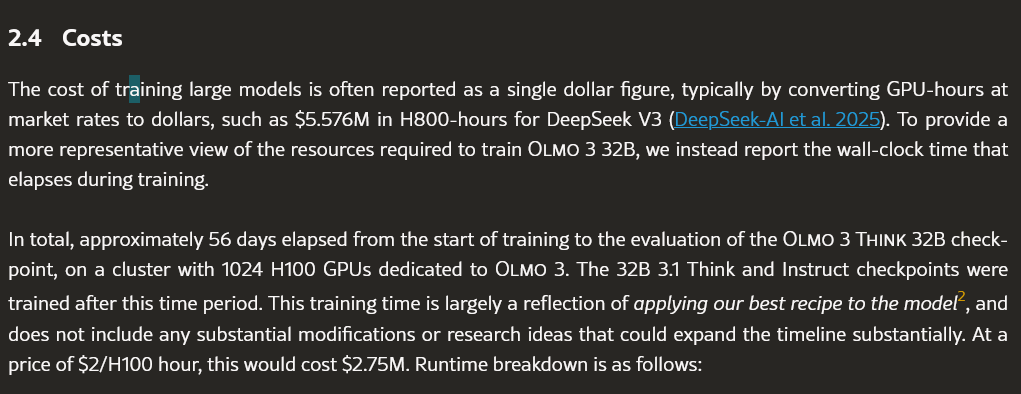
The important take-away here is that training incurs a cost in time and in the amount of carbon emitted (read: polution), so the size of model you decide to train matters. While one instance of model inference, is much “cheaper” than training, you can imagine that inference actually ends up being where the most environmental impact occurs, with queries (input-output requests) from millions of users happen in a short amount of time. So, the smaller model you can use to accomplish a task, the less space, time, and environmental impact you will likely have.
NOW if you’re asking, “well why are we even doing this, then?!? Can’t we just not use the systems?”
Well, yes and no. You can not use the systems, but there’s a good chance you will given the ubiquity of these systems and when you do we want you to be able to think critically about that use. So we’ll try to give you some knowledge and experience here, but leave it to you to gain the expertise you need throughout your educational journey. If nothing else, we’re here to make your life more difficult so that you can’t just do things out of ignorance.

Now that we’ve given a high-level view of why we’re doing this and a little background, let’s move on to your MEPO, design challenge specifics.
The design competition and using a chatbot
What we are going to do here is use the chatbot (that uses a Olmo 3 model for output) in the way many folks are using it now - to find information and solutions to problems. In the pages that follow, you’ll see information on various dimensions in which think about an LLM (and many of generative AI-based systems). Either way, you’ll have this module to refer back to later if you want! In showing you “how the sausage is made”, we’ll also show you some methods folks use to augment their models with specific context and information so that they work better.


You can find a link for the chatbot you will be using at the end of the quick learning modules in MEPO 2026. Start here (or just click on MEPO 2026 -> Foundation on the left hand menu)
